How to Decide Between a Resin Bound or Block Paving Driveway
Choosing a new driveway is partly about kerb appeal, but it is also about daily practicality. Resin bound surfacing and block paving are two popular driveway material options because they both look smart, suit a wide range of homes, and can be designed in different colours and patterns.
The right choice depends on how you use your driveway, the style of your property, your maintenance expectations, and the finish you prefer.
What is the main difference between resin bound and block paving?
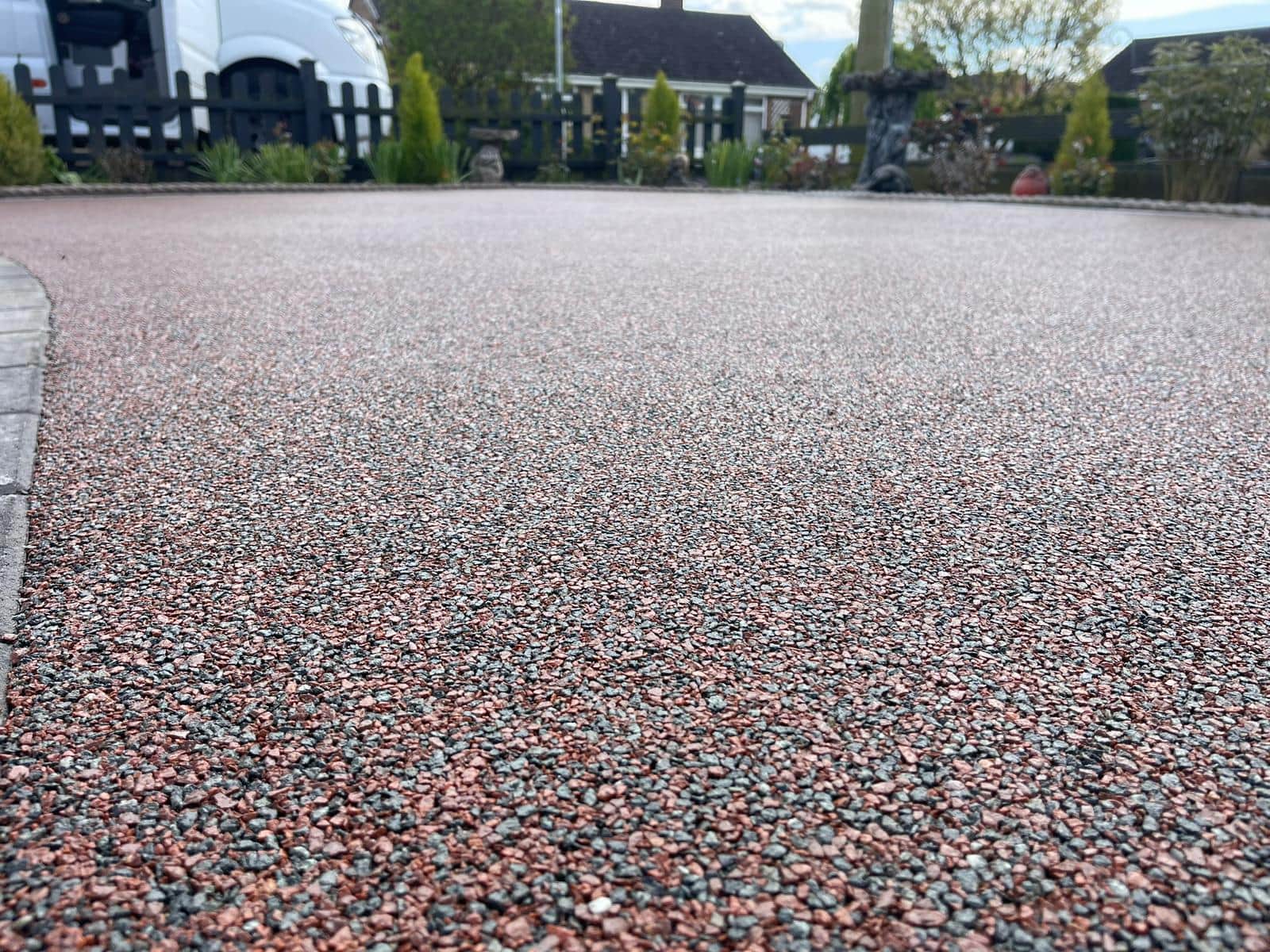
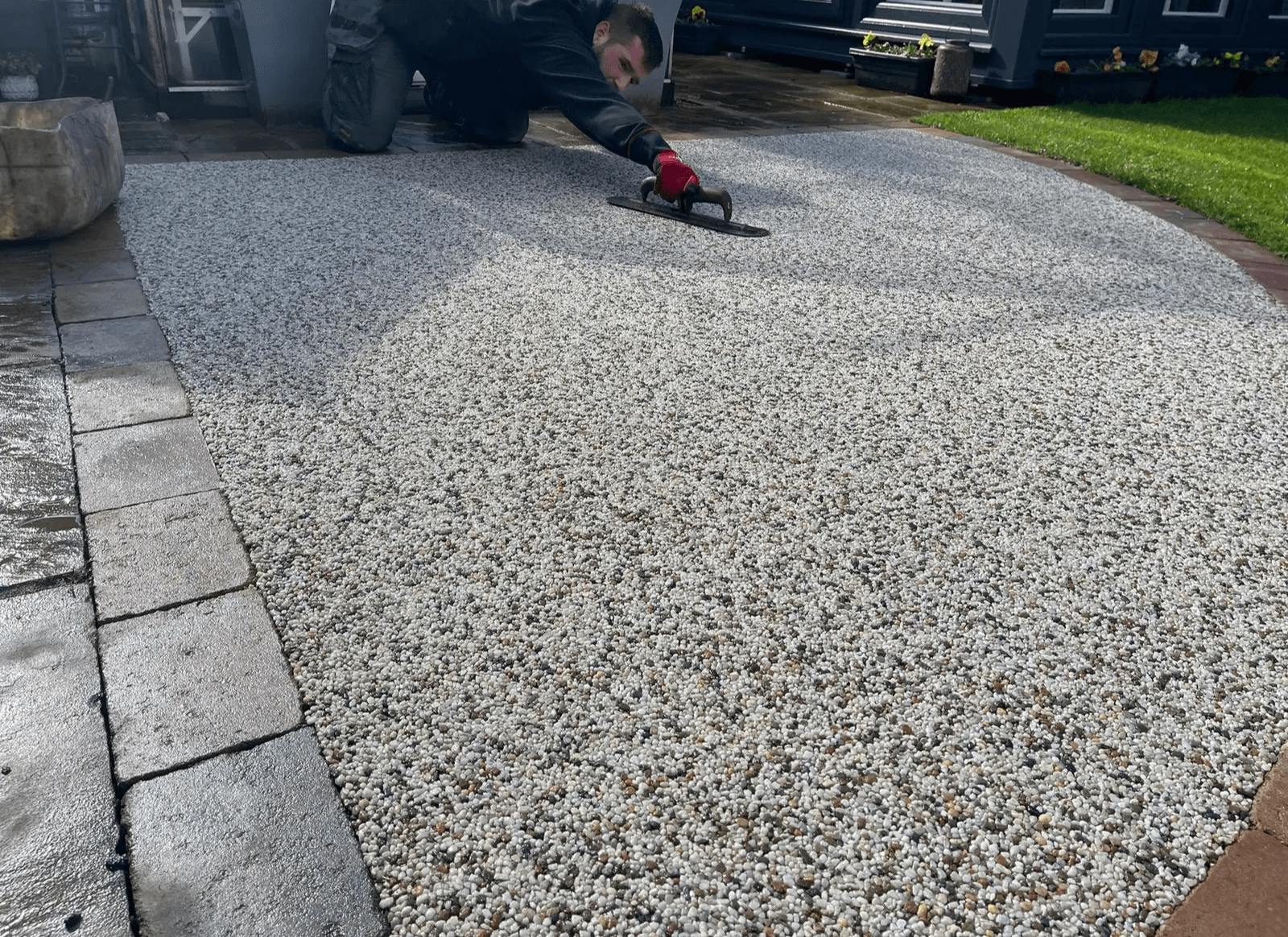
The main difference is that resin bound creates a smooth, continuous surface, while block paving is made from individual blocks laid in a pattern. Resin bound surfacing is formed by mixing natural aggregate with resin and trowelling it onto a suitable base, creating a neat, seamless finish. Block paving uses concrete, clay, or stone blocks, giving a more traditional, segmented look with visible joints.
That difference affects more than appearance. It influences drainage, maintenance, repair options, installation requirements, and how the driveway feels underfoot. When comparing resin vs block paving, it helps to think beyond the first impression and picture how the surface will behave over several years of use.
Resin bound driveways offer a clean, contemporary finish
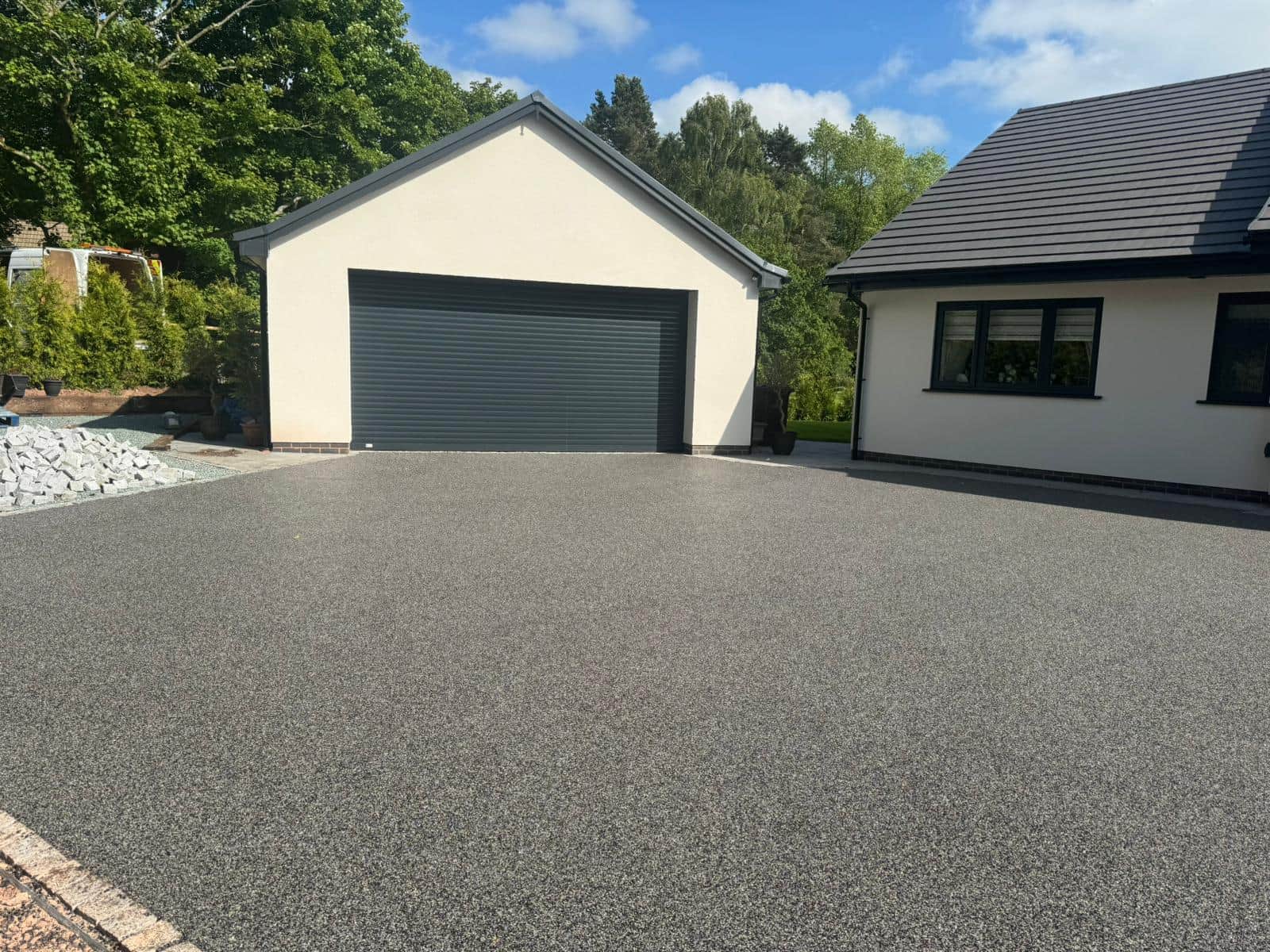
A resin bound driveway is often chosen by homeowners who want a modern, understated surface. The finish is smooth but textured, so it can feel refined without looking plain. Because the aggregate is visible, it still has natural variation, which helps the driveway sit comfortably alongside brick, render, stone, or landscaping.
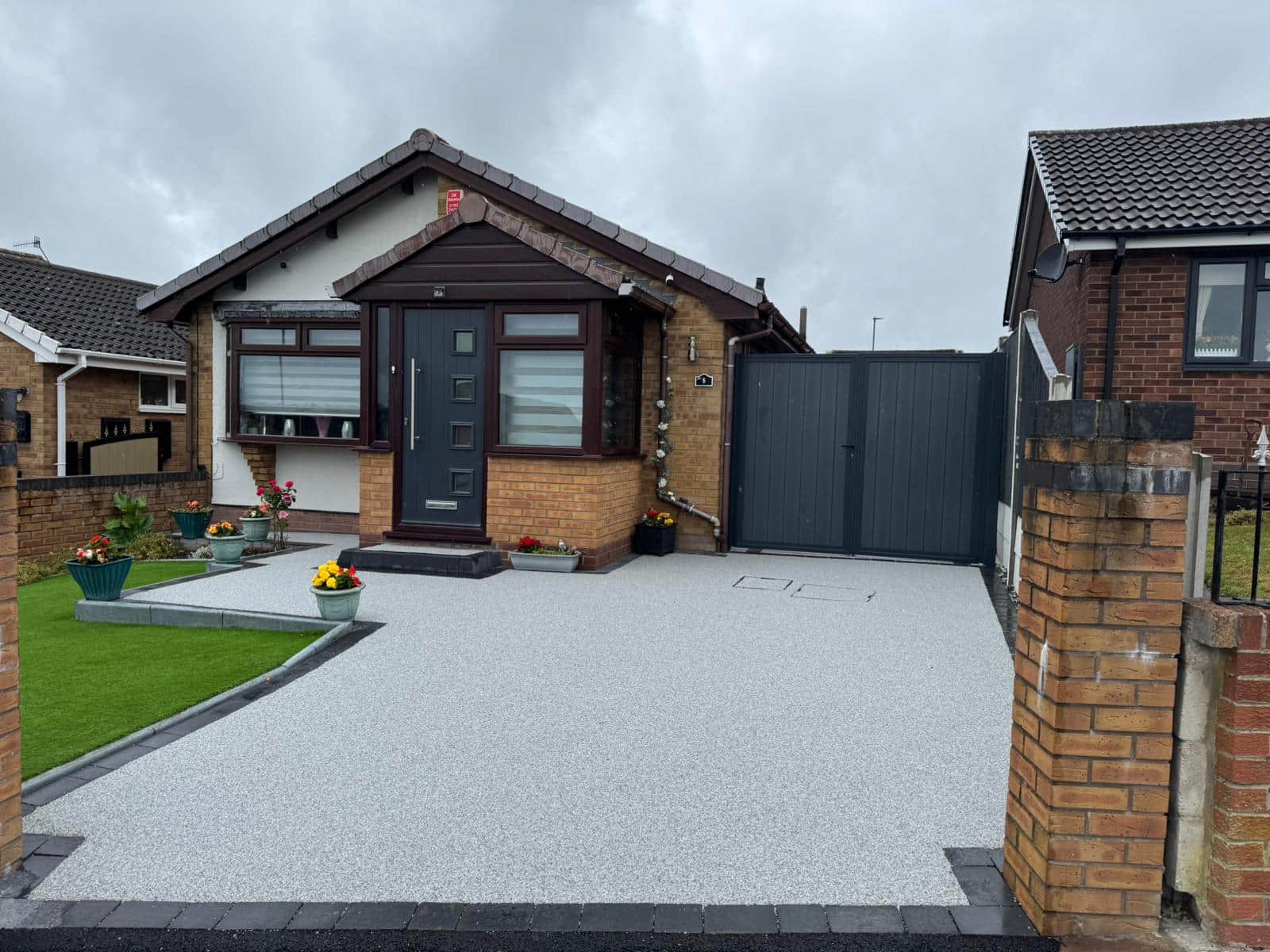
One of the big attractions is the seamless appearance. There are no individual blocks or strong pattern lines, so the surface can make a small frontage feel less busy. This can work especially well for contemporary homes, renovated properties, or driveways where the aim is to create a simple, tidy entrance.
Resin bound surfaces are also associated with good permeability when installed correctly over a suitable porous base. That means rainwater can drain through the surface rather than simply running across it. However, drainage performance depends on the whole build-up, not just the top layer, so the base preparation matters.
Block paving gives a classic and highly customisable look
Block paving has a more traditional feel, although the final look depends heavily on the block style, colour, size, and laying pattern. It can suit period homes, suburban properties, and driveways where a defined design is part of the appeal. Herringbone, stretcher bond, basketweave, and mixed-size patterns all create different effects.
The individual blocks make it easy to introduce borders, curves, contrasting edges, or feature sections. If you want your driveway to echo brickwork, garden walls, or paths, block paving can be a natural fit. It is one of the most flexible driveway surface types for creating a decorative finish.
Another practical advantage is that individual blocks can usually be lifted and replaced if a localised repair is needed. This can be helpful if access is required beneath the surface or if one area becomes stained or damaged. The trade-off is that the joints between blocks may need more attention over time.
How much maintenance are you prepared to do?
Maintenance is often the deciding factor because both surfaces can look excellent when new, but they age differently. Resin bound driveways are generally valued for their low-maintenance character, while block paving can need more regular care to keep joints clean and stable.
With resin bound, routine maintenance usually means sweeping away leaves, removing debris, and washing the surface when needed. Like any outdoor surface, it can still collect dirt, algae, or marks, particularly in shaded areas. Prompt cleaning helps prevent organic matter settling into the texture.
Block paving needs similar cleaning, but the joints add another task. Weeds and moss can appear between blocks, and jointing sand may need topping up after cleaning or weathering. For some homeowners, that is a fair exchange for the look and repair flexibility; for others, it becomes a chore.
A simple maintenance comparison:
Resin bound: best for a smooth look with fewer joints and straightforward sweeping or washing.
Block paving: best if you like a patterned surface and do not mind occasional weed control and joint care.
Both options: benefit from regular cleaning, quick stain treatment, and keeping heavy debris from building up.
Neither option: is completely maintenance-free, especially beneath trees or in damp, shaded areas.
Design choices shape the final impression
Both surfaces can be attractive, but they create different moods. Resin bound tends to feel sleek and calm. Block paving tends to feel more structured and decorative. Neither is automatically better; the better choice is the one that complements your home rather than fighting with it.
For a minimalist exterior, resin bound can provide a clean foreground without too much visual detail. For a cottage, townhouse, or traditional brick property, block paving may feel more in keeping. If your front garden includes planting, edging, and pathways, think about how the driveway will connect with those elements.
Colour is also important. Very light surfaces can brighten a frontage but may show dirt more readily. Darker tones can look smart and grounded, though they may feel heavier across a large area. Mid-toned natural colours are often the easiest to blend with existing materials.
Which driveway suits your everyday use?
The best driveway is the one that handles your normal routine without becoming awkward. If you regularly turn cars, use bins across the surface, park multiple vehicles, or need a smooth route for pushchairs or mobility aids, those details should influence your decision.
Resin bound can be appealing where a level, continuous surface is wanted. It reduces the visual and physical interruption of joints, which can make the area feel easier to move across. It can also suit driveways that double as a clean, open space in front of the home.
Block paving can be practical where design definition matters or where future access may be useful. If a section needs lifting, individual blocks can often be reinstated more neatly than cutting into a continuous surface. It is also a strong choice where edging, patterns, or zones help organise the space.
Before choosing, ask yourself:
How many vehicles will use the driveway daily? Consider weight, turning space, and wear patterns.
Do you prefer seamless or patterned finishes? This will quickly narrow your surface preference.
Is drainage a concern? Discuss the full base construction, not only the visible material.
How much upkeep feels realistic? Be honest about whether you will maintain joints and remove weeds.
Could underground access be needed later? If so, repairability may matter more than appearance alone.
Installation quality matters more than the surface alone
Even the best material can disappoint if it is installed poorly. A good driveway depends on excavation, sub-base preparation, edging, levels, drainage, and appropriate materials for the site. This is why quotes should explain what is included beneath the visible finish, not just the top surface.
For resin bound, the base must be suitable for the system and intended use. For block paving, the sub-base, bedding layer, restraints, and jointing all affect long-term performance. Shortcuts may not show immediately, but they can lead to movement, dips, drainage issues, or premature wear.
When speaking to installers, ask clear questions about preparation, drainage, expected maintenance, and how the surface will be finished at edges, thresholds, and inspection covers. A trustworthy recommendation should take account of your property, not push one option as universally superior.
A balanced way to choose
If you want a sleek, modern, low-joint surface, resin bound may be the better fit. If you prefer a classic patterned driveway with strong design flexibility and replaceable sections, block paving may suit you more. Both can improve the appearance and usability of a home when chosen carefully.
The smartest approach is to compare these driveway material options against your property style, budget, maintenance habits, drainage needs, and long-term plans. Look at real examples where possible, check how each surface looks in different weather, and focus on quality installation as much as the material itself. That way, the decision becomes less about following a trend and more about creating a driveway that genuinely works for your home.
Conclusion
In most cases, resin bound is the better choice if you want a smooth, contemporary finish with minimal joint maintenance, while block paving is ideal if you prefer a classic patterned look and the reassurance that individual areas can be lifted and replaced.
If you are unsure, compare real installations, ask what base and drainage build-up is included in the quote, and choose the option that best matches how you use the space day to day.