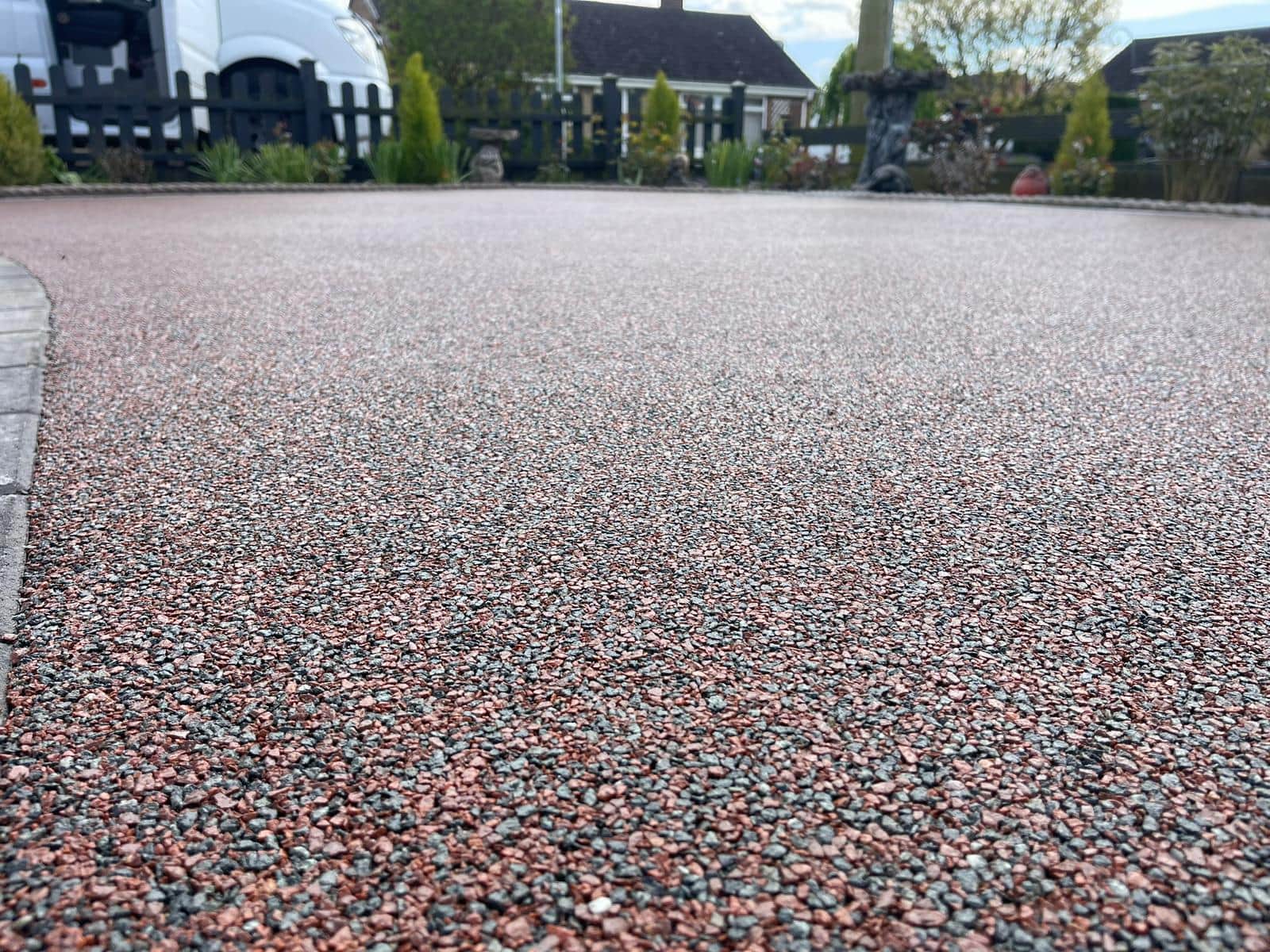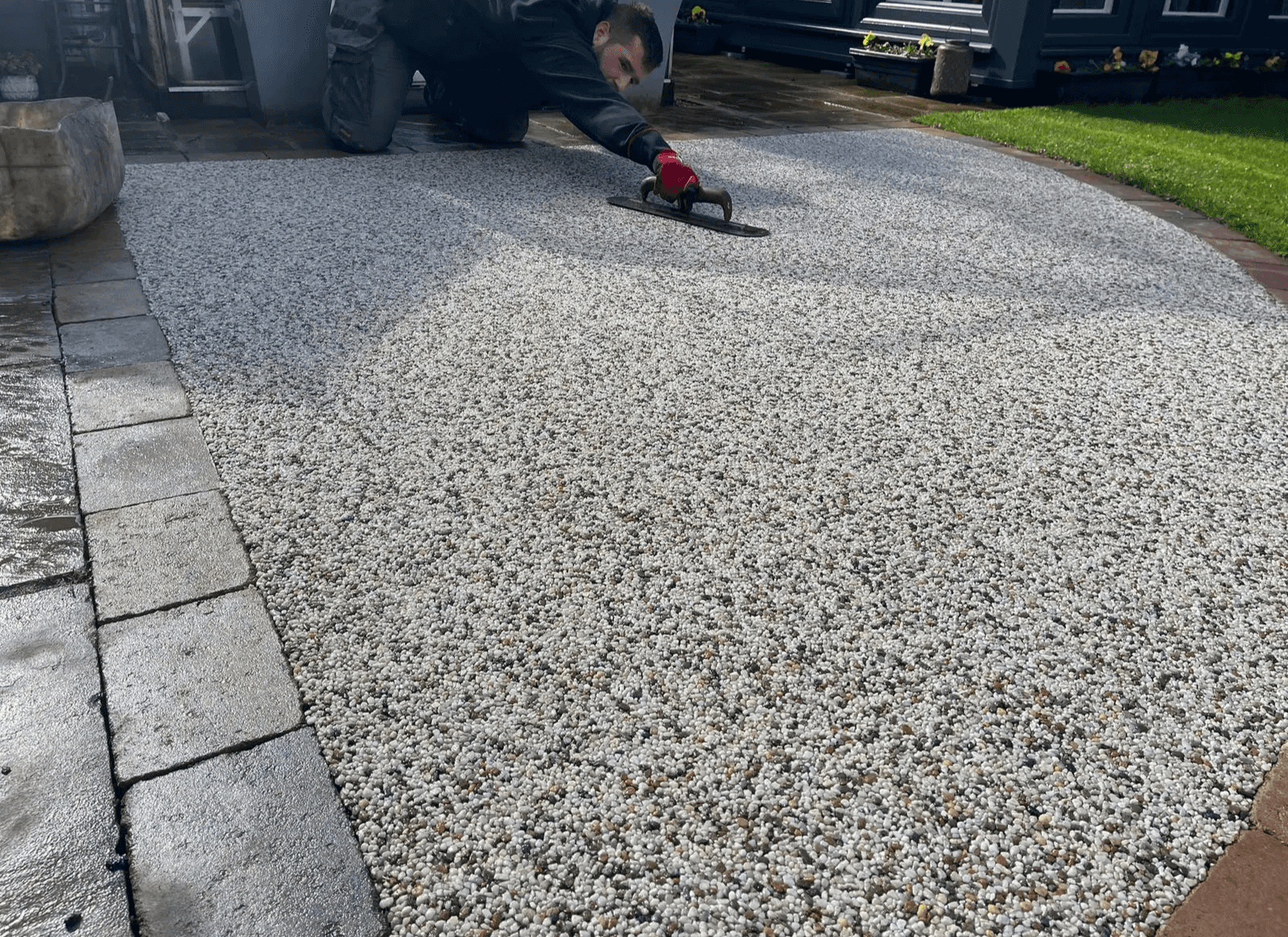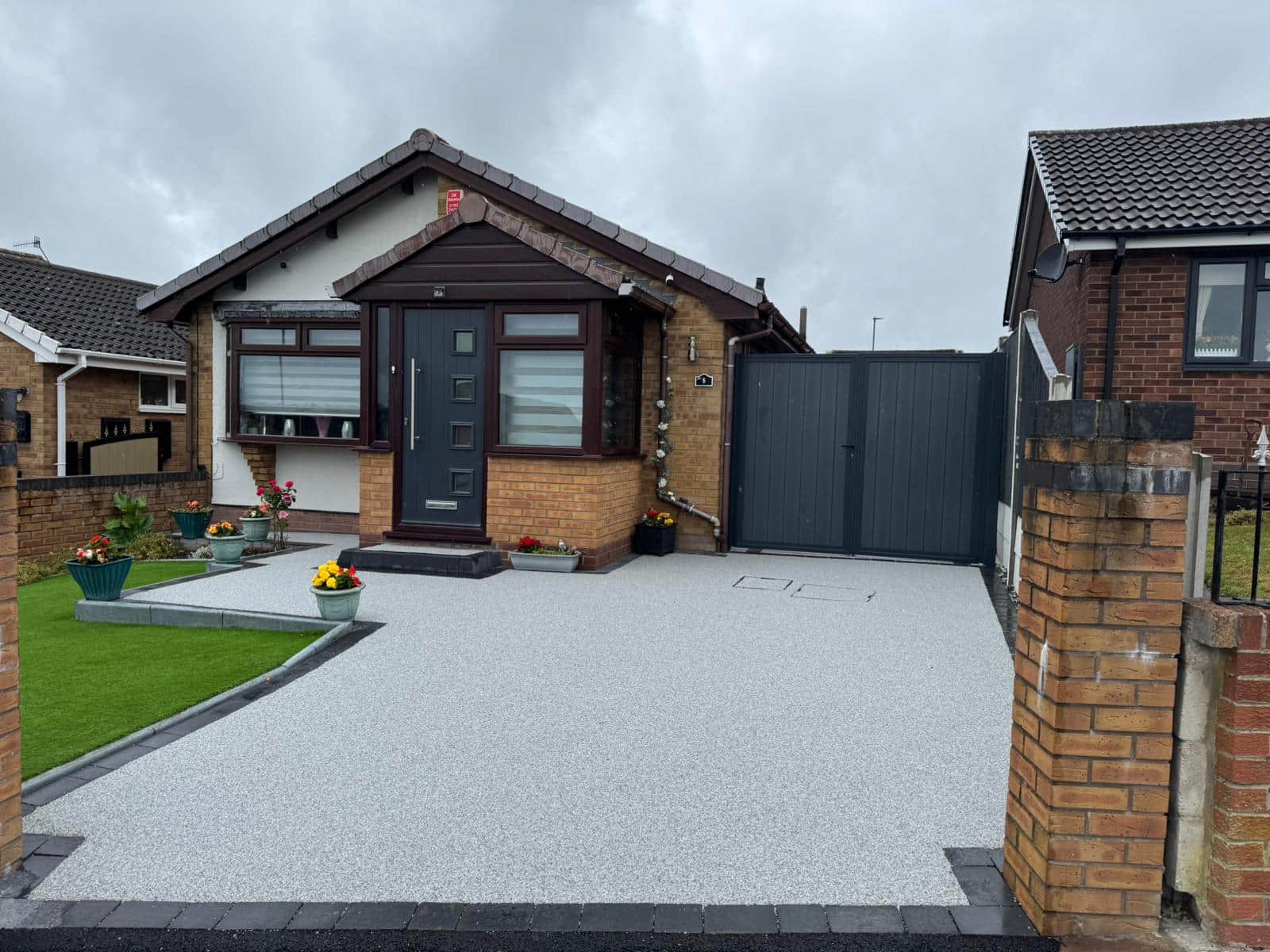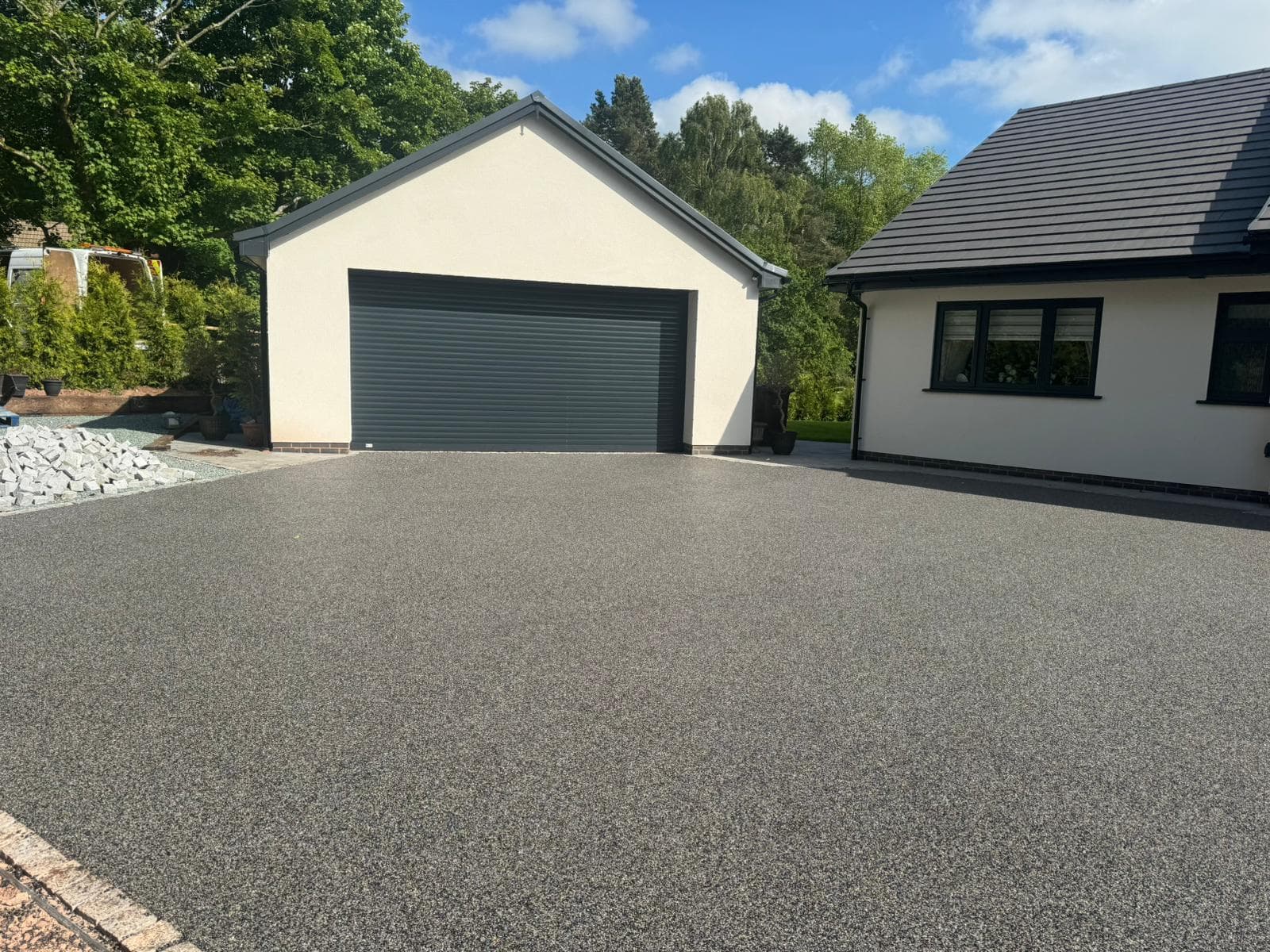
A resin bound driveway can give a UK home a smart, durable and low-maintenance entrance, but the final price depends on far more than the surface finish. The cost is usually calculated per square metre, then adjusted for the condition of the existing base, drainage needs, access, edging, aggregate choice and labour.
This guide explains what shapes the resin bound driveway cost, how to read quotes sensibly, and where homeowners can avoid false savings.
What affects the cost of a resin bound driveway?
The cost of a resin bound driveway is mainly affected by the size of the area, the amount of groundwork required, the chosen aggregate, the quality of resin, and the complexity of the installation. A small, simple overlay on a sound existing base will usually sit at the lower end of the market, while a larger driveway needing excavation, a new sub-base, drainage work or detailed edging will cost considerably more.
Current UK cost guides commonly place resin bound driveway prices somewhere around the mid tens of pounds per square metre for straightforward work, rising where new base preparation is needed. Checkatrade’s 2026 guide breaks the average cost down by material and labour, while MyBuilder gives a standard resin bound range of roughly £40–£70 per m². Other UK trade and installer guides show higher ranges, especially for fully installed systems with significant preparation, so the safest approach is to treat online figures as budgeting guidance rather than a fixed quotation. (checkatrade.com)
The important point is that the visible resin layer is only one part of the job. A driveway must carry vehicle weight, shed water correctly, resist movement and suit the layout of the property. If the base beneath is weak, cracked, poorly drained or uneven, simply laying resin over the top may look good briefly but can lead to cracking, pooling or premature failure.
Resin bound is priced by the whole system, not just the surface
A good resin bound driveway is built in layers. The installer is not just applying decorative stone; they are assessing the ground, preparing the base, setting levels, managing edges and laying a consistent resin and aggregate mix. That is why the price for resin bound driveway work often varies so much between properties that look similar from the street.
In many cases, an existing tarmac or concrete driveway may be suitable for an overlay if it is stable, clean, well-drained and free from serious cracking. This can reduce labour, waste removal and material costs because the installer does not need to excavate and rebuild the foundation. However, if the old driveway is breaking up, holding water or moving under traffic, it may need to be removed and replaced with a suitable base before the resin surface is installed.
Drainage is a particular consideration in the UK because front gardens and driveways must manage rainfall responsibly. Resin bound surfaces are known for being permeable when installed as part of a suitable permeable system, but permeability depends on the whole build-up beneath the surface. If the base is not permeable, drainage may still need to be designed into the project rather than assumed.
The main elements included in a quotation
When comparing resin bound driveway prices, it helps to know what you are actually paying for. A cheaper quote may look attractive, but it might exclude preparation, edging, waste disposal or VAT. A more expensive quote may be better value if it includes a complete installation and a properly specified base.
A typical quotation may include:
Site assessment and measurements: The contractor should measure the driveway accurately, check levels and look at access for machinery, materials and waste removal.
Preparation work: This can include removing old surfacing, excavating, compacting, cleaning or repairing an existing base.
Sub-base or base course: Where needed, the driveway may require a new foundation suitable for vehicles and drainage.
Edging restraints: Edges keep the resin surface neat and secure, especially where it meets lawns, paths, walls, pavements or garage thresholds.
Resin and aggregate: The choice of aggregate colour, size and quality can affect the appearance and cost.
Labour and installation: Resin bound surfacing must be mixed and laid carefully, usually in suitable weather conditions and within workable time limits.
Waste removal and clean-up: Excavated material, old paving and packaging need to be removed responsibly.
VAT and guarantees: Always check whether VAT is included and what workmanship or product guarantees apply.
The cost of resin bound driveway installation is therefore a package cost. If one quote is much lower than the others, ask what has been left out before assuming it is a bargain.
Size, shape and access make a bigger difference than many people expect
The square meterage of the driveway is the starting point, but it is not the whole story. A simple rectangular driveway is generally quicker to prepare and lay than a narrow, awkwardly shaped area with curves, steps, drains, inspection covers or multiple levels. Labour time increases when installers have to cut around features, create detailed edges or work in tight spaces.
Small driveways can also have a higher cost per square metre because fixed costs are spread over a smaller area. Travel, delivery, waste handling, mixing equipment and labour set-up still apply whether the project is modest or large. This is one reason why two homeowners may receive very different per-metre rates even when they choose a similar finish.
Access matters too. If materials can be delivered close to the driveway and waste can be removed easily, the job is more efficient. If the property has restricted parking, narrow side access, steep gradients or limited space for mixing, more labour may be needed. That added time is likely to be reflected in the final resin bound driveway cost.
How does the existing driveway condition change the price?
The existing driveway can either reduce the price or become the biggest cost driver. If it provides a firm, suitable surface, an overlay may be possible. If it is unstable, poorly drained or badly cracked, it can increase the work because the installer may need to remove it, rebuild the base and correct levels before laying resin.
A sound base is essential because resin bound surfacing is not designed to hide structural problems. It creates a smooth, attractive wearing course, but it relies on what sits underneath. Where a driveway has sunk, moved or broken due to tree roots, failed sub-base or poor drainage, those issues should be dealt with first.
Homeowners sometimes try to save money by asking for resin to be laid over a questionable surface. That can be a false economy. If cracks transfer through, water freezes beneath the surface or the base continues to move, the repair may be more disruptive than doing the job properly at the outset.
Material choices influence both appearance and budget
One of the attractions of resin bound driveways is the range of finishes available. Natural aggregates can create anything from a warm golden tone to a crisp grey or darker contemporary look. The aggregate blend affects kerb appeal, but it can also influence cost depending on availability, colour and specification.
Resin quality matters as well. UV-stable resin is often chosen for driveways where colour retention is important, particularly with lighter aggregates. Non-UV options may be cheaper, but they can be more prone to colour changes over time. The right choice depends on the look you want, the exposure of the driveway and the installer’s recommendation.
Depth and specification should also be appropriate for vehicle use. Domestic driveways need a surface that can handle regular car traffic, turning and parking. A reputable installer should explain the system they propose, not simply offer a generic price per square metre without context.
Planning, drainage and practical UK considerations
For many UK homeowners, drainage is not just a technical matter; it can affect whether additional permissions or alterations are needed. Permeable surfacing can help manage rainwater by allowing water to pass through, but only when the surface and base are designed as a permeable system. If water is directed onto the public pavement or road, that may create problems.
The Planning Portal explains that householders usually do not need planning permission for a new or replacement driveway of any size if a permeable surface is used, or if rainwater is directed to a lawn or border to drain naturally. If the area is more than five square metres and uses an impermeable surface that sends water to the road, planning permission may be required. (gayshasurfaces.co.uk)
This is why the cheapest-looking quote is not always the safest. A proper installer should consider falls, drainage channels, soakaways where relevant, thresholds, damp-proof courses and the relationship between the driveway and the public highway. Getting these details right protects both the finish and the property.
Comparing quotes without choosing on price alone
When you receive several quotes, it is tempting to compare only the total figure. That is understandable, especially when the price for resin bound driveway work can represent a significant household investment. However, the best quote is the one that clearly explains what is being installed, how the base will be prepared and what is included.
Use this checklist before making a decision:
Check the measured area: Make sure each contractor is pricing the same square meterage.
Ask about the base: Find out whether the quote is for an overlay, repairs or a full excavation and rebuild.
Confirm drainage plans: Ask how rainwater will be managed and whether the system is permeable.
Clarify the resin type: Check whether UV-stable resin is included if colour stability matters to you.
Look for specification details: The quote should describe the build-up, edging and preparation, not just the top layer.
Ask what is excluded: Waste removal, VAT, drainage channels, manhole covers and edging can all affect the final bill.
Review workmanship assurances: Understand what is covered, for how long and under what conditions.
Be wary of pressure selling: A driveway should be surveyed and specified properly, not sold through a rushed doorstep offer.
A clear quote gives you confidence. A vague quote leaves room for misunderstanding and extra costs once the work has started.
Ways to manage the budget sensibly
There are sensible ways to control the resin bound driveway cost without compromising the parts that matter. The aim is not to buy the cheapest possible surface, but to spend money where it protects the driveway’s performance and appearance.
Start by being realistic about the condition of the existing driveway. If it needs groundwork, budget for it rather than hoping it can be skipped. Good preparation is rarely the exciting part of a project, but it is often the difference between a driveway that lasts well and one that develops problems.
You can also simplify the design. Straight edges, fewer intricate curves and a practical aggregate choice may reduce labour and material costs. If you have a large frontage, consider whether the entire area needs resin or whether borders, planting or a defined parking zone would create a better balance between appearance and budget.
Timing can help too. Installers may be busier in drier months, and weather conditions matter for resin work. While you should not rush into a poor deal, planning ahead gives you more time to gather quotes, check specifications and choose an installer based on quality rather than availability alone.
Warning signs of an unrealistically low price
Low resin bound driveway prices are not automatically suspicious, especially for simple overlays or competitive local markets. However, a price that is far below other quotes should prompt careful questions. The risk is that the contractor may be cutting corners on preparation, resin quality, depth, drainage or labour.
Warning signs include:
A quote given without measuring or inspecting the driveway properly.
No clear explanation of whether the existing base is suitable.
No mention of drainage or water run-off.
Vague descriptions such as “resin finish” without the system specification.
Pressure to agree immediately for a supposed one-day discount.
Cash-only requests with limited paperwork.
No address, company details, insurance information or clear guarantee terms.
A resin bound driveway is a practical surface as well as a cosmetic upgrade. If the price does not allow enough time or material for proper preparation, it may not represent good value.
The real value is in long-term performance
Understanding the resin bound driveway cost means looking beyond the installation day. A well-specified driveway can improve the entrance to your home, reduce loose stones compared with traditional gravel, provide a smooth walking and parking surface, and help manage rainwater when installed correctly. It can also be easier to maintain than some jointed paving surfaces, as there are no individual blocks to shift or weed-filled joints to manage.
Maintenance is still necessary. Regular sweeping, occasional washing and prompt removal of moss, leaves or spills will help preserve the finish. Heavy point loads, dragging sharp objects, poor drainage or chemical spills can all cause problems, so it is worth asking the installer for care guidance once the surface has cured.
The cheapest installation is not always the least expensive over time. Paying for the right base, suitable materials and careful workmanship can reduce the likelihood of repairs and disappointment later.
A practical takeaway for homeowners
The resin bound driveway cost for a UK home depends on the whole project: area, access, existing base, drainage, edging, materials and labour. Online figures are useful for early budgeting, but your own price will only become clear after a proper site assessment and a written specification.
If you are comparing resin bound driveway prices, focus on value rather than the lowest total. Ask what is included, check how the base and drainage will be handled, and make sure the proposed system suits regular vehicle use. A driveway is part of your home’s everyday function as well as its kerb appeal, so it is worth getting the foundations of the quote right before choosing the finish you see on the surface.